Case Study


Sensor-Driven Advancements Optimize Manufacturing

Modern manufacturing’s trajectory is undeniably toward greater automation, precision, and safety. To fully realize the potential of these advancements, integrating cutting-edge technologies at every stage of the machinery life cycle is essential. Advanced sensing technology is invaluable for manufacturers, engineers, and machine builders striving for peak performance and uncompromising safety in their increasingly automated operations. It serves as the foundation upon which future innovation is built.


Case Study Summary

  • About

    Modern manufacturing’s trajectory is undeniably toward greater automation, precision, and safety. To fully realize the potential of these advancements, integrating cutting-edge technologies at every stage of the machinery life cycle is essential. Advanced sensing technology is invaluable for manufacturers, engineers, and machine builders striving for peak performance and uncompromising safety in their increasingly automated operations. It serves as the foundation upon which future innovation is built.

    Recognizing this critical link between sensing and manufacturing advancement, makers, engineers, and machine builders increasingly turn to Interface, a leader in force measurement solutions, to integrate precision and reliability into the very DNA of their machinery. Interface load cells, torque transducers, multi-axis sensors, load shackles, and instrumentation are essential for developing, testing, and operating industrial machinery in manufacturing environments. Our force sensors are crucial for testing machine tool performance, robotic systems, press operations, and assembly lines, leading to increased production efficiency, reduced material waste, and enhanced operational safety throughout the manufacturing life cycle.
  • challenge

    The global manufacturing landscape of 21 million companies across diverse sectors presents immense complexity. Machines require reliable and accurate test and measurement systems to adapt to evolving manufacturing production needs. Traditional machines lack integrated sensing, resulting in inefficiencies, unrealized automation benefits, tool wear, and safety risks.

    Without accurate force feedback, manufacturing can experience significant unplanned downtime. Inaccurate measurements significantly increase tool replacement costs and jeopardize safety due to insufficient machine control.

  • Solutions

    Interface solutions meet demanding design specifications, validating real-world performance, and ensuring that machinery operates safely, efficiently, and reliably in every manufacturing stage.

    Manufacturing Robotic Grinding and Polishing During Production

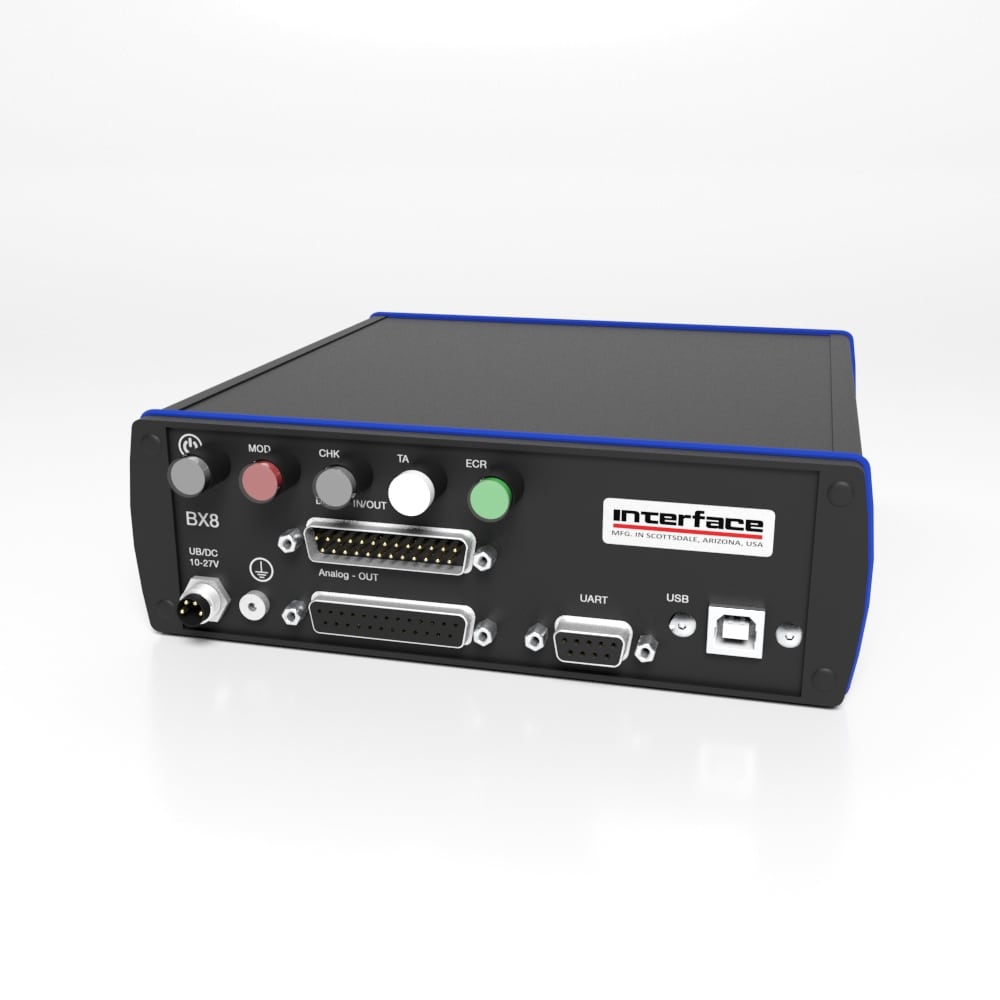
    Robots are used to grind and polish various materials and surfaces. Integrating a force measurement system to monitor and control the force applied to the grinding workpiece is preventative and time-saving. Interface’s 6A40A 6-Axis Load Cell can be installed between the flange and the grinding tool. When connected to the BX8-HD44 Data Acquisition, measurements are sent to a control system using our BlueDAQ software. The multi-axis sensor measures forces and torques and the DAQ system delivers results while transmitting scaled analog output signals to the robot’s control system. 

    Manufacturing Feed Roller System

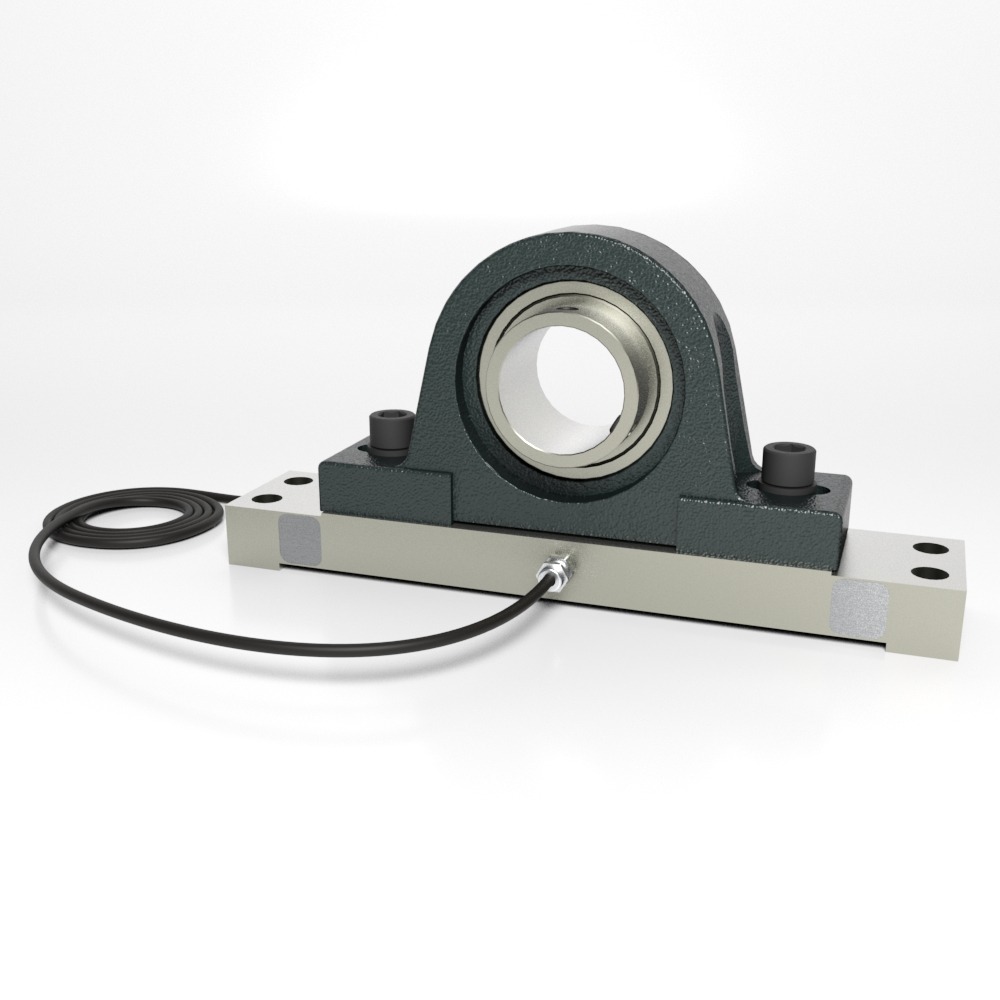
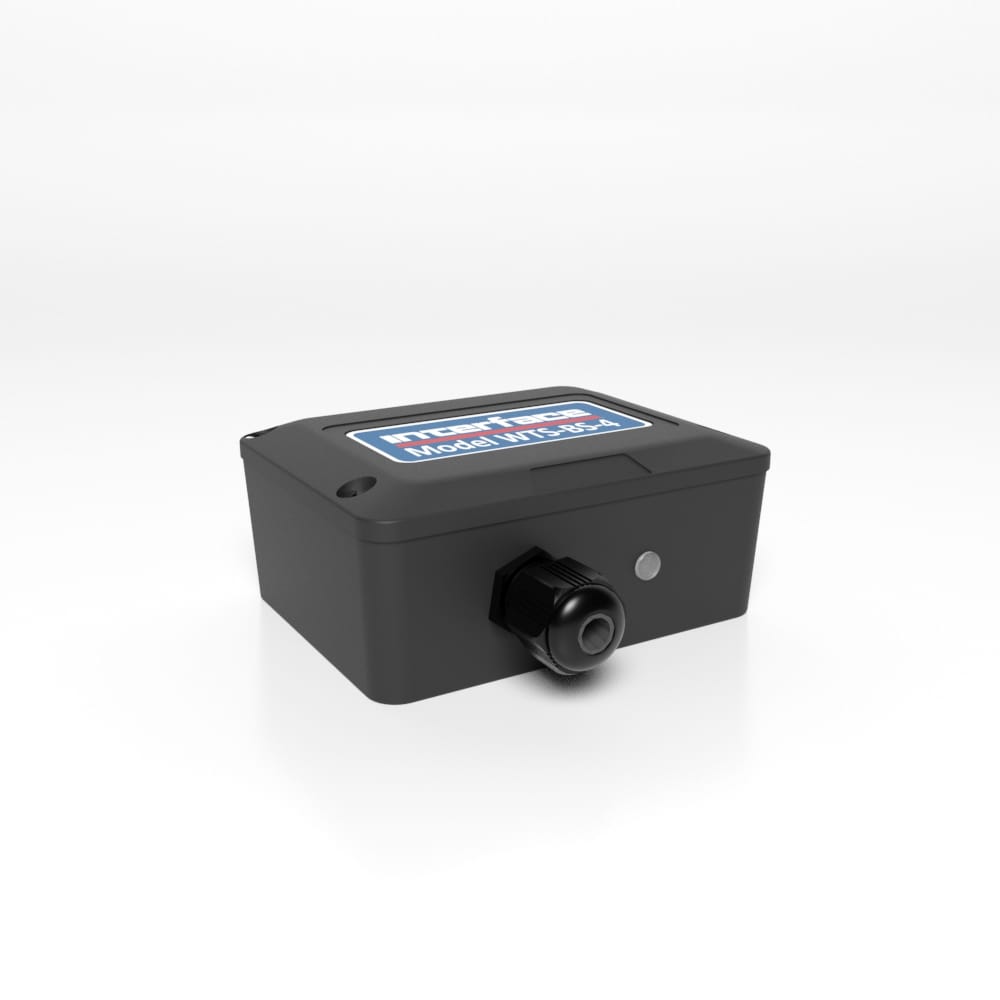
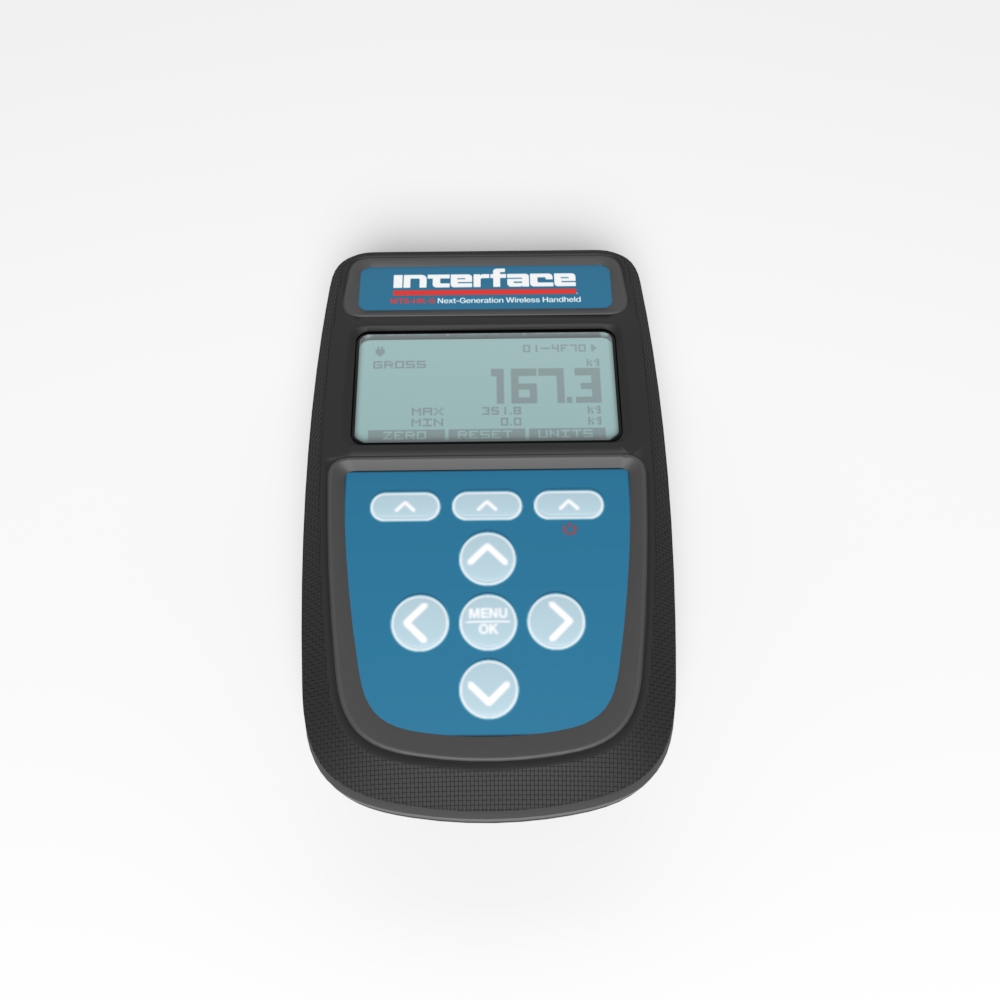
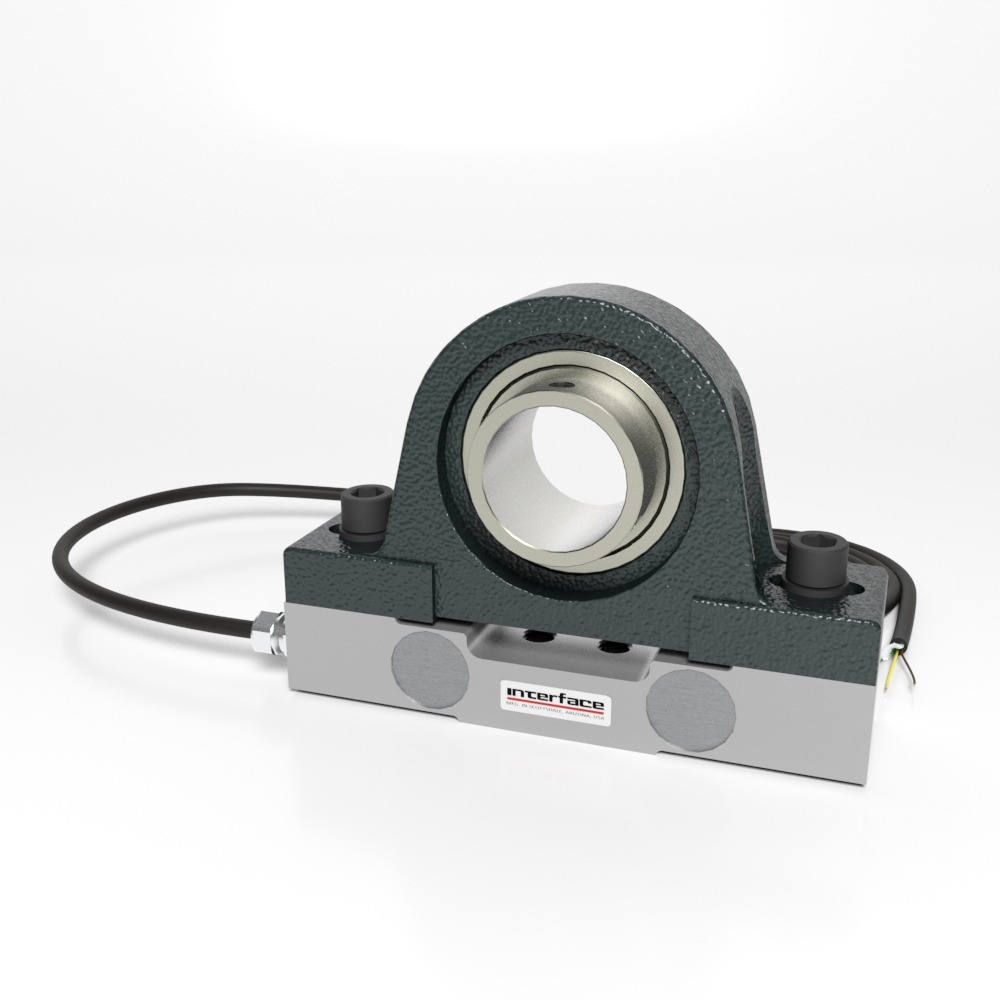
    A feed roller system that monitors the forces at both ends of the rollers to maintain a constant straight feed increases production and quality control. By installing two PBLC Pillow Block Load Cells at both ends of the bottom roller, applied forces are measured when connected to the WTS-AM-1E Wireless Strain Bridge Transmitter. The data is transmitted to the WTS-BS-6 Wireless Telemetry Dongle Base Station and the WTS-HK-S Next-Generation Wireless Handheld to maintain and monitor the feed roller performance.

    Manufacturing Press Load Monitoring for Material Testing

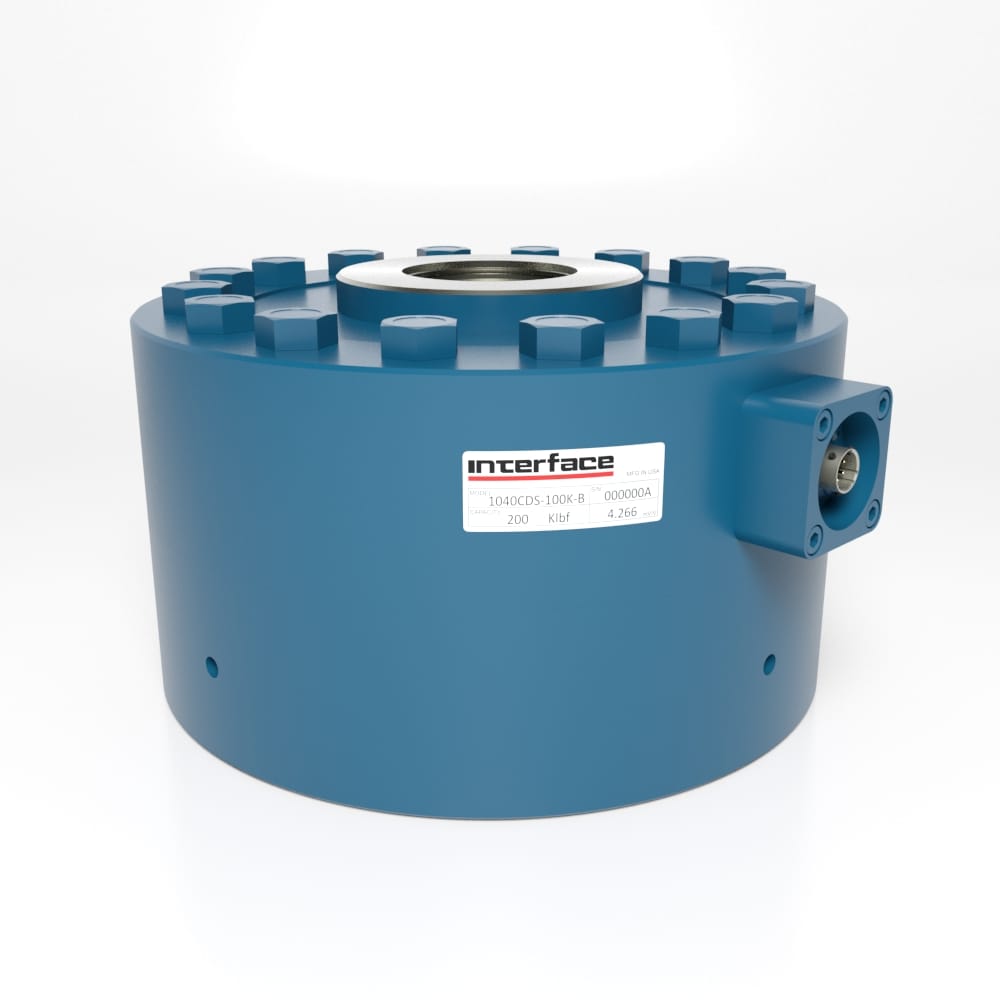
    Press forming is a process used to deform various materials, such as steel and aluminum, by bending and shaping them into the desired form. A force measurement solution accurately monitors the forces the press-forming machine applies for quality control and traceability during production. Installing the 1000 High Capacity Fatigue-Rated LowProfile™ Load Cell for large press forming machines involves placing material under the punch plate to create a shape, while the load cell measures the applied force. The results are sent to the INF-USB3 Universal Serial Bus Single Channel PC Interface Module to accurately monitor and log the force results of the press force machine, ensuring zero-error production performance.

  • Results

    Integrating Interface force sensors and instrumentation enhances manufacturing operations, leading to noticeable efficiency increases and reduced material waste. Precise data enables the early detection of anomalies and overload conditions, preventing equipment failures and mitigating worker safety risks. As the integration of AI and advanced robotics continues to accelerate, Interface remains at the forefront, providing the critical sensing intelligence necessary to unlock the next generation of intelligent and autonomous manufacturing capabilities.